BRIDGETOWN, Barbados — Caribbean tourism continued its expansion in 2025, recording a 2.5% increase in international stay-over arrivals to an estimated 35 million visits. This is according to the Caribbean Tourism Organization (CTO).
This performance — approximately 900,000 more tourists than in 2024 — reflects the region’s sustained recovery and resilience. In fact, arrivals once again surpass pre-pandemic 2019 levels.
Despite a complicated global situation, the region saw steady tourism demand for most of the year. Economic conditions changed in key source markets. Geopolitical tensions increased. Bad weather caused disruptions, including Hurricane Melissa.
Aliyyah Shakeer, Director of Research, Caribbean Tourism Organization
“Caribbean tourism in 2025 demonstrated continued resilience and adaptability even as the global landscape presented a number of challenges,” said Aliyyah Shakeer, CTO’s Director of Research. “Strategic investments in tourism infrastructure, sustained marketing efforts, and incremental gains in airlift connectivity helped support growth and maintain the region’s competitiveness.”
Performance across the year was uneven but generally positive. While the first quarter recorded a slight contraction of 0.3% amid early-year uncertainty, arrivals rebounded in the second and third quarters with growth of 5% and 5.6%, respectively. The fourth quarter remained broadly stable with marginal growth of 0.2% as late-year momentum softened.
Monthly arrivals ranged between 2.1 million and 3.5 million. Arrivals peaked during the traditional high-demand periods of March, July and December. Notably, all months in 2025 exceeded their corresponding 2019 levels. This underscores the strength of the region’s post-pandemic recovery.
Across destinations, performance remained mixed. Strong growth was recorded in several destinations, including Guyana, Dominica, St. Vincent and the Grenadines, and Curaçao, reflecting ongoing product development and market diversification efforts.
At the same time, some destinations experienced contractions influenced by external economic pressures, capacity constraints and localized disruptions. Nevertheless, a majority of destinations have now surpassed their pre-pandemic benchmarks. This highlights the region’s overall recovery trajectory.
Source Markets
The United States remained the Caribbean’s largest source market, with arrivals increasing 0.5% to approximately 17 million visitors. While demand from this market remained relatively stable, performance was uneven across the year, reflecting more cautious consumer behavior and varying conditions across destinations.
Arrivals from Canada declined 5.3% to an estimated 3.1 million visitors, remaining below pre-pandemic levels. Meanwhile, higher travel costs and increased competition from alternative destinations influenced travel patterns.
Similarly, arrivals from Europe decreased 3.3% to approximately 5.1 million visitors with recovery continuing at a slower pace compared with other markets.
In contrast, South America emerged as the strongest-performing source market with arrivals increasing 23.7% to 2.4 million visits. This growth was supported by improved air connectivity, targeted marketing initiatives and rising outbound demand. Therefore, it contributed to a gradual diversification of the region’s source markets.
Intra-regional travel also showed modest improvement, increasing 5.1%, although ongoing challenges related to air connectivity and travel costs continued to constrain growth.
Caribbean Hotel Performance
S Hotel Montego Bay
The Caribbean hotel sector posted mixed results in 2025. According to CoStar, average room occupancy declined slightly to 63.7% from 65% in 2024. However, the Average Daily Rate (ADR) rose 2.1% to US$350.37. Revenue Per Available Room (RevPAR) increased modestly by 0.8% to $223.12.
Performance varied across destinations with several markets recording growth across key indicators and others experiencing declines, reflecting uneven demand patterns and localized market conditions.
Cruise Tourism Performance
The cruise sector continued its strong expansion in 2025 with total cruise visits increasing 5.2% to an estimated 35.5 million visits. This represents a significant 16.7% increase over pre-pandemic 2019 levels. It confirms the sector’s full recovery and continued growth trajectory.
Growth in cruise activity was evident throughout the year with particularly strong performance in the fourth quarter driven by increased capacity and strong seasonal demand. The Bahamas remained the leading cruise destination, receiving a record 10.7 million visits. Several high-performing destinations across the region followed.
The continued expansion of cruise itineraries, fleet capacity and port infrastructure has supported sustained growth in this segment. This reinforces its importance to the region’s overall tourism performance.
Outlook
Looking ahead, the outlook for Caribbean tourism remains cautiously optimistic. The sector is expected to transition into a phase of more moderate, stable growth as global travel patterns normalize.
“While growth is expected to continue, the pace of expansion may ease as the industry navigates a shifting global environment,” noted Shakeer. “Maintaining a steady focus on strengthening air connectivity, particularly intra-regional connectivity; enhancing product offerings; and diversifying source markets will be important to supporting sustained growth and resilience over the longer term.”
Notwithstanding current travel and tourism challenges, CTO projects that stay-over arrivals will increase between 3% and 4% in 2026, supported by steady demand from North America and continued expansion in select emerging markets. Cruise tourism is also expected to grow further with projected increases between 5% and 7%.
However, ongoing global uncertainties — including economic conditions, travel costs and external geopolitical developments — may continue to influence travel demand and performance across destinations.
CTO Secretary General Dona Regis-Prosper
“Caribbean tourism continues to demonstrate its resilience in the face of evolving global conditions, but this is no time for complacency. We must remain vigilant and proactive, working together as a united region to navigate uncertainty and sustain our momentum,” said Dona Regis-Prosper, CTO Secretary-General & CEO. “By strengthening collaboration, enhancing air connectivity and advancing responsible tourism practices, we can ensure long-term growth that benefits our people and economies.”
Regis-Prosper asserted the Caribbean remains well-positioned as a highly desirable destination, supported by its diverse tourism offerings, strong brand appeal and continued commitment to sustainable and regenerative tourism development.
Used by Google Analytics to determine which links on a page are being clicked
30 seconds
_ga_
ID used to identify users
2 years
_gid
ID used to identify users for 24 hours after last activity
24 hours
_gat
Used to monitor number of Google Analytics server requests when using Google Tag Manager
1 minute
_gac_
Contains information related to marketing campaigns of the user. These are shared with Google AdWords / Google Ads when the Google Ads and Google Analytics accounts are linked together.
90 days
__utma
ID used to identify users and sessions
2 years after last activity
__utmt
Used to monitor number of Google Analytics server requests
10 minutes
__utmb
Used to distinguish new sessions and visits. This cookie is set when the GA.js javascript library is loaded and there is no existing __utmb cookie. The cookie is updated every time data is sent to the Google Analytics server.
30 minutes after last activity
__utmc
Used only with old Urchin versions of Google Analytics and not with GA.js. Was used to distinguish between new sessions and visits at the end of a session.
End of session (browser)
__utmz
Contains information about the traffic source or campaign that directed user to the website. The cookie is set when the GA.js javascript is loaded and updated when data is sent to the Google Anaytics server
6 months after last activity
__utmv
Contains custom information set by the web developer via the _setCustomVar method in Google Analytics. This cookie is updated every time new data is sent to the Google Analytics server.
2 years after last activity
__utmx
Used to determine whether a user is included in an A / B or Multivariate test.
18 months
Google reCAPTCHA helps protect websites from spam and abuse by verifying user interactions through challenges.
Name
Description
Duration
_GRECAPTCHA
Google reCAPTCHA sets a necessary cookie (_GRECAPTCHA) when executed for the purpose of providing its risk analysis.


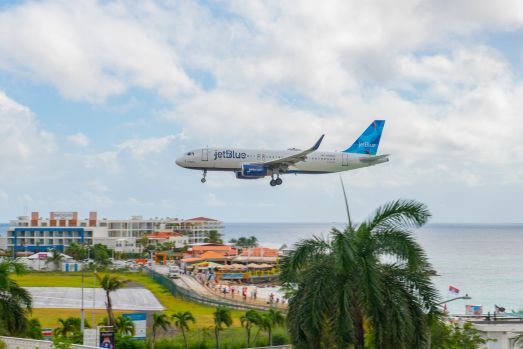


 The cruise sector continued its strong expansion in 2025 with total cruise visits increasing 5.2% to an estimated 35.5 million visits. This represents a significant 16.7% increase over pre-pandemic 2019 levels. It confirms the sector’s full recovery and continued growth trajectory.