
Early Childhood Development: Financing, Data and Equity Issues in Latin America and the Caribbean

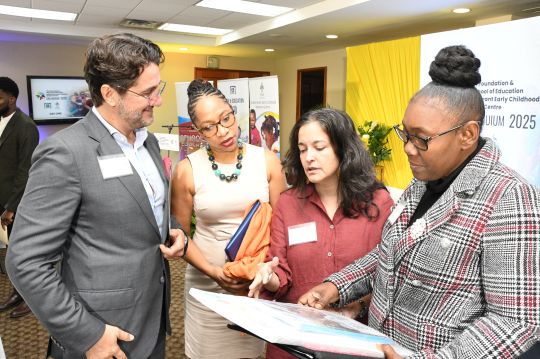
KINGSTON, Jamaica – Strengthening early childhood education in Latin America and the Caribbean will require better financing, stronger data systems, and more inclusive services. Experts addressed a recent panel discussion on early childhood development in the region about this need.
The panel of experts, which included specialists in global financing and early childhood education, were speaking at a recent colloquium. This event was organised by the JN Foundation and The University of the West Indies (UWI) School of Education in partnership with the Dudley Grant Early Childhood Resource Centre.
Financing Early Childhood Development
Dr Emre Ozaltin, lead economist for the Caribbean at the World Bank, noted that sustainable support for early childhood development (ECD) will require a diversified financing approach. He called for long-term financing strategies that foster coordinated support from development partners and the private sector. These strategies ensure continuity and effective services even in the face of disasters.
“A diversified approach to funding in this area may be best. A combination of public budgets, targeted subsidies, and innovative financing mechanisms, such as public private partnerships and targeted taxes,” he said.
He emphasized that “Sustainable ECD financing is not a one-size-fits-all." Tailored approaches to social, political, and economic realities are essential. Additionally, “the flexibility to be able to respond quickly when disasters do strike are needed.”
Use of Data in Childhood Education
He also underscored the need to invest in robust data systems. This is essential “to be able to observe the actionable information to improve the [existing] systems that we have.”
Professor Zoyah Kinkead-Clark teaches early childhood care and education at the UWI School of Education. She also stressed the need for better monitoring and evaluation in the sector. This is important to make sure programs and actions work well.
Using the recent passage of Hurricane Melissa in Jamaica as an example, she also said by integrating evaluation with comprehensive support services, stakeholders can better meet the needs of children affected by crises. This aids, among other things, ensuring equity and continuity of care.
“We really need to be using that monitoring and evaluation to make the key decisions that are needed to guide the sector. We understand that many young children and their families are vulnerable, especially now. This highlights the need to provide the kind of support they require.” As a solution, she added, “As a region, perhaps we can start thinking about ‘wrap-around services’ for our children and their families,” she said.
Improved Learning Environments
Adding to the conversation, Dr. Rebecca Tortello, education specialist at the United Nations Children’s Fund (UNICEF), also highlighted the need for improved learning environments. She emphasized sensory-based spaces and programmes in early childhood institutions (ECIs). These environments support children’s social, emotional, physical, and cognitive development.
“It’s important that we find ways to replicate more of those spaces. We should follow a model created by UNICEF with the Rockhouse Foundation at Savanna-la-Mar Infant Academy, one of the schools badly damaged by Hurricane Melissa.” She added, “That model included clinical support through a partnership with the Ministry of Health and Wellness,” she said.
Research Screening Centre
“You heard the Minister [of Education] speak about a research screening centre [to come] in Portland. It will complement the one that exists at Mico [University College]. We had about eight of the sensory or clinical spaces before the hurricane. We need more such support at the early childhood level to enable the necessary follow-ups along the National Early Screening Pathway," she explained. This pathway starts with the Child Health Development Passport and moves through multiple assessments. These assessments include the Jamaica School Readiness Assessment developed by UNICEF and the UWI Department of Child Health, administered by the Early Childhood Commission (ECC). “These sensory spaces, if strategically placed around the island, can be a possible way to bridge a key gap in the pathway,” she added.
Dr. Tortello said the way forward should also include improved infrastructure at ECIs, such as ramps and accessible toilets. The aim is to make facilities more inclusive. As she handed over the Pathway document, she also emphasised the need to expand access to teaching resources. This includes accessible digital textbooks (ADTs) now available on UNICEF’s Learning Passport Jamaica website.
Additionally, there are professional development programmes like the UNICEF-developed Inclusive Early Childhood Education course offered by the ECC and the Jamaica Teaching Council annually.
Importance of Legislation
Dr Tracy-Ann Morgan-Smith, senior director of regulations and monitoring at the ECC, noted that along with ensuring that services are fully inclusive to accommodate children with disabilities and other functional needs, improving the early childhood sector, particularly for Jamaica, will also mean reviewing legislation. Implementation of teacher licensing and enhancement of disaster mitigation measures are part of this effort.
“We’re looking at putting in the legislation for system strengthening [to cater to] the whole aspect of the licensing and mandatory areas for teachers to do their professional development. Areas like toxic stress and the trauma children deal with after a disaster. That is critical.” She further added, “We also have to look at our climate resilience, how we now respond to education in emergency situations,” she said.
Jamaica’s Data Protection Act
She noted that Jamaica’s new Data Protection Act and the digital age are important. Attention will focus on how early childhood laws can protect children. She also mentioned the Act’s impact on others whose data is collected and used.
The two-day JN Foundation and UWI School of Education Dudley Grant Early Childhood Resource Centre Colloquium was held from November 27-28 at the UWI Regional Headquarters. It was held under the theme: Let’s shape tomorrow, together. It brought together educators, policymakers, and sector leaders to examine the state of early childhood education in the region. The goal was to chart the way forward.

